
For decades, multinational businesses selected their holding companies, financing entities and intellectual property structures primarily on the basis of one criterion: taxation. Jurisdictions competed fiercely by offering low corporate tax rates, extensive tax treaty networks and favourable participation exemption regimes.
The international tax landscape has fundamentally changed. The implementation of the OECD's Base Erosion and Profit Shifting (BEPS) project, the introduction of Pillar Two, the tightening of anti-abuse legislation and increasing transparency have substantially reduced the importance of tax rate arbitrage.
This does not mean that all jurisdictions have become fiscally identical. On the contrary, some countries remain considerably more attractive than others for international businesses. The decisive difference, however, is that today's attractiveness is determined far less by nominal tax rates and far more by legal certainty, treaty protection, political stability and the ability to establish genuine economic substance.
For internationally active companies, choosing the right jurisdiction has become an exercise in balancing taxation, corporate law, regulatory certainty and operational reality.
1. The Netherlands: Still Europe's Logistics and Holding Hub
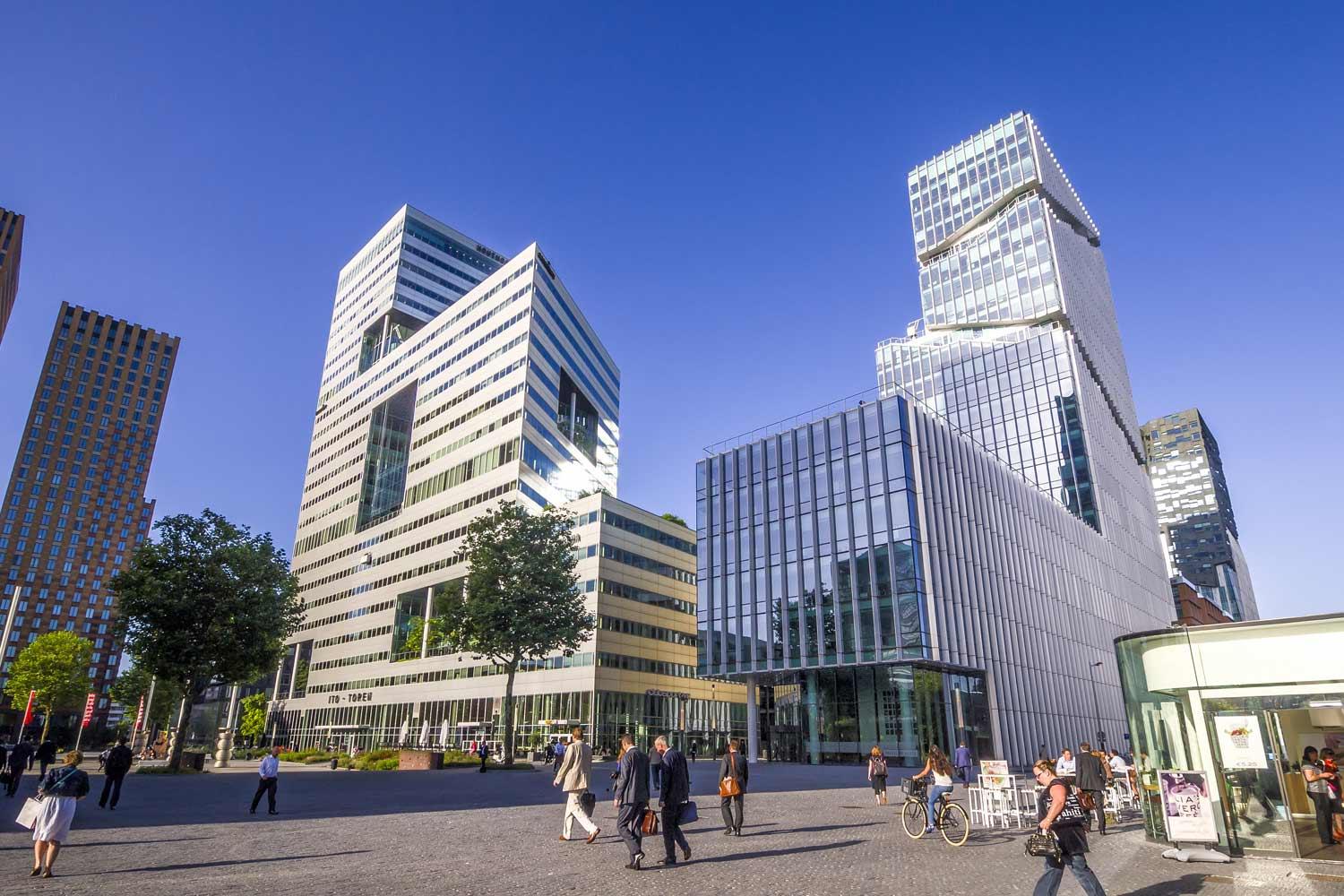
Despite repeated predictions that the Netherlands would lose its attractiveness following the introduction of stricter anti-abuse rules, it remains one of Europe's premier holding jurisdictions.
Its greatest strength lies not in its corporate income tax rate but in its exceptional treaty network, sophisticated legal infrastructure and long-established reputation among international investors.
Dutch holding companies continue to benefit from:
- a comprehensive participation exemption for qualifying shareholdings;
- one of the world's largest tax treaty networks;
- predictable tax administration;
- specialised commercial courts;
- excellent financing infrastructure;
- access to highly qualified international professionals, but unfortunately often quite expensive.
The Netherlands has, however, become far less suitable for purely tax-driven structures. Dutch tax authorities now apply substance requirements rigorously. Companies are generally expected to have resident directors with genuine decision-making powers, office facilities, local management, adequate equity and employees appropriate to their activities.
For multinational groups with genuine European management functions, however, the Netherlands remains among the world's strongest jurisdictions.
2. Luxembourg: A Financial Centre Built on Expertise
Luxembourg continues to occupy a unique position within international taxation.
Although many historical tax advantages have disappeared following the implementation of ATAD, DAC6 and BEPS, Luxembourg remains exceptionally attractive for investment funds, private equity structures, securitisation vehicles and cross-border financing.

Its strengths include:
- extensive experience with international investment structures;
- specialised financial legislation;
- political stability;
- highly qualified multilingual professionals, but unfortunately often quite expensive;
- excellent access to European capital markets.
Like the Netherlands, Luxembourg increasingly requires real economic substance. Empty holding companies have become difficult to justify, while structures with genuine investment management or treasury functions continue to thrive.
3. Belgium: An Underrated Holding Jurisdiction
Belgium rarely appears in rankings of low-tax jurisdictions, yet it remains surprisingly competitive for many multinational groups.

Its attractiveness rests upon several structural advantages:
- the Dividend Received Deduction (DRD) regime;
- exemption of qualifying capital gains on shares;
- an extensive tax treaty network and the highest presence of international organisations and representatives in the world (after Washington D.C.);
- no withholding tax in numerous intra-group situations;
- predictable corporate law that has just been modernised;
- experienced advance ruling practice;
- the availability of international experts with more competitive rates and practices than competitors abroad.
Following Pillar Two, Belgium may actually become relatively more attractive. Since tax rate competition is becoming less relevant, investors increasingly value legal certainty and institutional stability.
Belgium is particularly suitable where international groups establish genuine management activities rather than purely passive holding companies.
4. Ireland: More Than a Low Corporate Tax Rate
Ireland's famous 12,5% corporate income tax rate has lost much of its international importance due to Pillar Two.
Nevertheless, Ireland remains highly attractive for some investors, because of factors extending well beyond taxation. These include:
- an English-speaking legal environment;
- common law tradition;
- highly educated workforce;
- strong technology ecosystem;
- concentration of multinational headquarters;
- excellent access to US investment.
For companies operating real businesses—particularly technology, pharmaceuticals and digital services—Ireland continues to offer significant advantages.
5. Singapore: Asia's Premier International Business Centre
Outside Europe, Singapore remains perhaps the world's most attractive jurisdiction for regional headquarters.

Its strengths include:
- political stability;
- extremely efficient government administration;
- sophisticated legal system;
- strong treaty network;
- world-class banking sector;
- strategic location for Asian markets.
Singapore also places increasing emphasis on economic substance. Regional headquarters are expected to employ staff, conduct management locally and perform genuine commercial activities.
For businesses operating throughout Asia-Pacific, Singapore remains exceptionally attractive despite global tax reforms.
6. Switzerland: Stability Above All
Although Switzerland no longer offers the preferential tax regimes it once did, it continues to attract multinational headquarters.
The reasons are largely non-tax:
- political neutrality;
- exceptional legal certainty;
- highly skilled labour force;
- sophisticated financial markets;
- stable regulatory environment.
Certain cantons remain fiscally competitive, but Switzerland's principal attraction is institutional rather than fiscal.
7. United Arab Emirates: A New International Holding Location
The United Arab Emirates has undergone perhaps the greatest transformation. Historically known as a zero-tax jurisdiction, it introduced a federal corporate income tax in 2023 while preserving substantial advantages for many international businesses.
The UAE offers:
- relatively low effective taxation;
- modern infrastructure;
- extensive free zones;
- political stability;
- excellent international connectivity.
However, companies increasingly need to demonstrate real management, commercial activities and economic substance to benefit fully from its tax regime.
Common characteristics
The Common Thread: Substance Has Become Essential.
The jurisdictions that remain attractive today share remarkably similar characteristics.
None of them compete primarily through extremely low tax rates.
Instead, they offer:
- stable legal systems;
- reliable courts;
- extensive tax treaty networks;
- experienced tax administrations;
- political stability;
- highly qualified professional services;
- genuine opportunities to establish substantive business operations.
The era of "letterbox companies" is effectively over.
Tax authorities now routinely examine whether companies genuinely conduct business in their country of residence. Directors must actually make strategic decisions locally. Board meetings should occur where management is said to reside. Companies should maintain appropriate offices, employees and operational activities.
Without these elements, treaty benefits, participation exemptions and directive protections may increasingly be denied.

What About Traditional Tax Havens?
Classical low-tax jurisdictions—including many Caribbean territories—have become considerably less attractive for mainstream multinational enterprises. This is largely due to:
- OECD blacklisting and monitoring;
- stricter substance requirements;
- reputational risks;
- banking difficulties;
- increasing denial of treaty benefits;
- the global minimum tax under Pillar Two.
While these jurisdictions may still serve niche purposes in certain investment structures, they are no longer the preferred choice for internationally operating corporate groups.
Choosing the Right Jurisdiction
There is no longer a universally "best" jurisdiction. Instead, the appropriate location depends upon several factors:
- the nature of the group's activities;
- expected investment flows;
- financing requirements;
- intellectual property ownership;
- operational management;
- shareholder profile;
- long-term commercial objectives.
For example:
- A European manufacturing group may find Belgium or the Netherlands the optimal holding jurisdiction.
- A private equity fund may prefer Luxembourg.
- A technology business expanding into Asia may select Singapore.
- A multinational pharmaceutical company may establish regional operations in Ireland.
- A global trading company may benefit from the UAE if genuine regional operations are established.
The optimal jurisdiction therefore depends far more on business strategy than on tax planning alone.
Conclusion
International taxation has entered a new era. The traditional competition between jurisdictions based solely on low corporate tax rates has largely disappeared under the combined influence of BEPS, Pillar Two, enhanced transparency and increasingly sophisticated anti-abuse legislation.
The decisive factor, however, is no longer simply where profits are taxed at the lowest rate. It is where businesses can demonstrate genuine economic substance, conduct real commercial activities and operate within a stable and predictable legal environment.

Personalised and niche international tax analysis, organisation and planning that Vanbelle Law Boutique also proposes already for several decades, has evolved from a search for the lowest tax burden into a broader exercise in sustainable corporate structuring, governance and long-term regulatory resilience. Businesses that align their legal structure with genuine commercial operations will continue to benefit from the world's leading jurisdictions, while purely tax-driven structures will face increasing scrutiny and diminishing advantages.