

The 2nd of August 2026 passed almost unnoticed in the calendars of many business leaders. Yet it marks a pivotal date in European artificial intelligence law.
Since that day, Regulation (EU) 2024/1689, known as the “AI Act”, has entered its effective enforcement phase: it is no longer merely a text to be familiar with, but a regulation that the European Commission and national authorities — including those in Belgium — can now enforce, with sanctions available where necessary.
For an SME, self-employed professional or start-up that uses a chatbot, generates visuals using AI, or deploys an automated recruitment tool, it is time to take stock.

1. A Regulation Introduced in Stages
The AI Act did not become applicable all at once. Since its entry into force on 1 August 2024, its obligations have been introduced in successive waves:
- February 2025: prohibition of AI practices considered unacceptable (social scoring, subliminal manipulation, etc.) and an obligation for every organisation using AI to train its staff in the responsible use of these tools (“AI literacy”).
- August 2025: entry into application of the regime applicable to general-purpose AI (GPAI) models, such as large language models.
- 2 August 2026: application of most of the the Regulation’s provisions, in particular the transparency obligations, and above all the start of effective enforcement by the Commission’s AI Office and the national authorities.
This timetable has itself been amended: an amending text, the “AI Digital Omnibus”, entered into force on 27 July 2026, just a few days before the deadline, and postponed some of the more burdensome obligations.
This type of last-minute adjustment illustrates the practical difficulties involved in implementing such an ambitious piece of legislation — and sends a useful signal to businesses: the AI Act timetable must be monitored continuously and should not be regarded as fixed once and for all.

2. What Becomes Mandatory Now
The key development as of 2 August 2026 concerns the transparency obligations under Article 50 of the Regulation. In practical terms, for any business providing a service that uses AI:
- Inform users that they are interacting with a machine. Chatbots, conversational agents and virtual assistants must be designed to indicate from the outset of the interaction that the user is communicating with an AI system, unless this is already obvious to a reasonably attentive user. An automated customer service function on an e-commerce website, for example, would typically fall within this requirement.
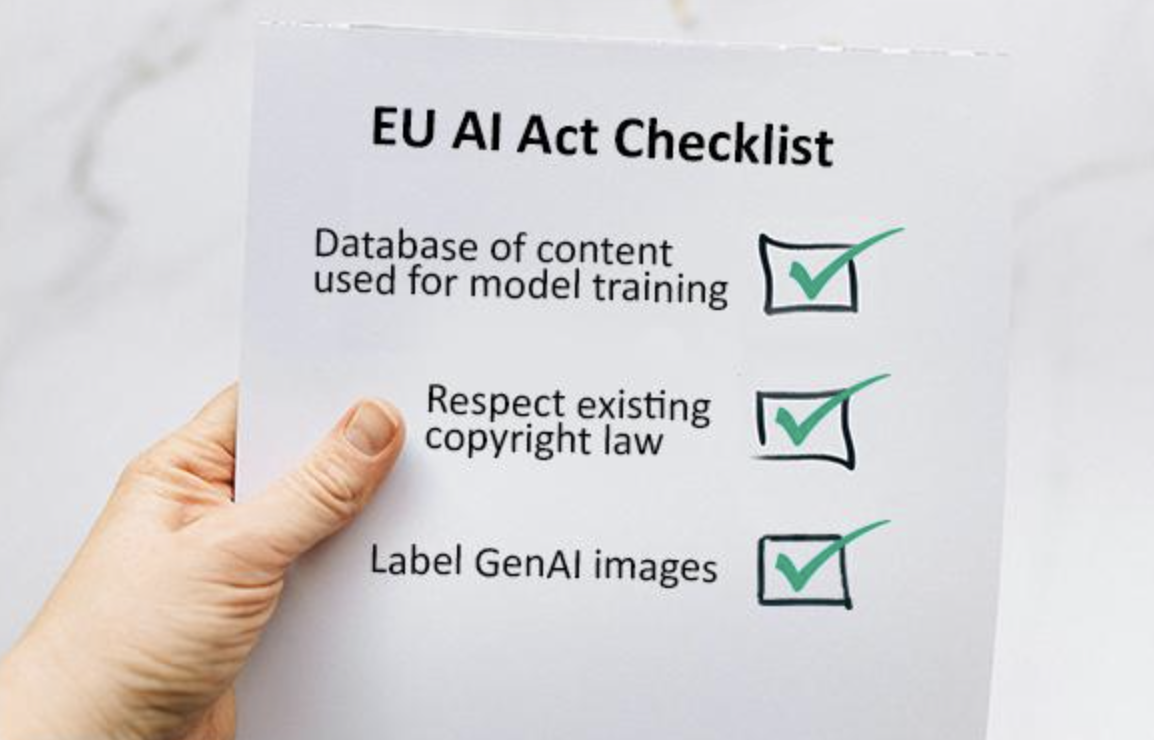
- Label AI-generated or AI-manipulated content. Providers of systems producing text, images, audio or video must incorporate machine-readable marking enabling the artificial origin of the content to be identified. An exception applies to editing assistance functions that do not substantially alter the meaning of the original content. For systems already placed on the market before 2 August 2026, this specific marking obligation will only become fully enforceable from 2 December 2026, allowing time for adaptation.
- Disclose the use of biometric or emotion recognition. Businesses deploying such tools — for example, to analyse candidates’ reactions during an interview or customers’ reactions in a store — must inform the persons concerned.
These obligations apply differently depending on whether an organisation is a “provider” (the entity that develops or places the system on the market) or a “deployer” (the entity that uses it in its business activities). An SME that merely integrates a chatbot developed by a third party nevertheless remains subject to certain information obligations towards its own customers.
3. What Has Been Postponed but Not Abolished
The most demanding part of the AI Act, concerning so-called “high-risk” systems (recruitment, credit scoring, education, biometrics, critical infrastructure, access to essential services, etc., as listed in Annex III), has not yet entered into application.
The Digital Omnibus has postponed these obligations until:
- 2 December 2027 for standalone systems;
- 2 August 2028 for systems integrated into products that are already subject to other regulatory requirements, such as medical devices.
This postponement should not be interpreted as a reason to reduce the necessary level of vigilance. Businesses considering deploying a CV-screening tool, customer-scoring system or decision-support tool in a sensitive area would be well advised to anticipate now the governance, technical documentation and human oversight requirements that will apply to them within two years.
In addition, two new prohibitions will enter into force on 2 December 2026:
- systems generating non-consensual intimate content (“nudification”);
- systems producing child sexual abuse material.
These prohibitions are absolute and do not provide for any transitional period.
4. Sanctions: Enforcement Becomes Real
Since 2 August 2026, the authorities have had the powers necessary to enforce the Regulation.
At European level, the AI Office primarily supervises providers of general-purpose AI models, while national market surveillance authorities — in Belgium, this role is expected to fall to sector-specific authorities that are either yet to be designated or are already competent depending on the sector — oversee most systems placed on the market or used within the national territory.
The AI Act’s sanctions regime is structured along similar lines to the GDPR, with fines potentially reaching several percent of worldwide turnover for the most serious infringements.
The AI Act is a complex piece of legislation with cross-cutting implications — including contract law, employment law, data protection and civil liability. Its gradual implementation provides valuable time for businesses to adapt, but that time is running out.
Vanbelle Law Boutique assists businesses in bringing their contractual and internal practices into compliance. Please do not hesitate to contact us to review your situation and find tailor made solutions.