
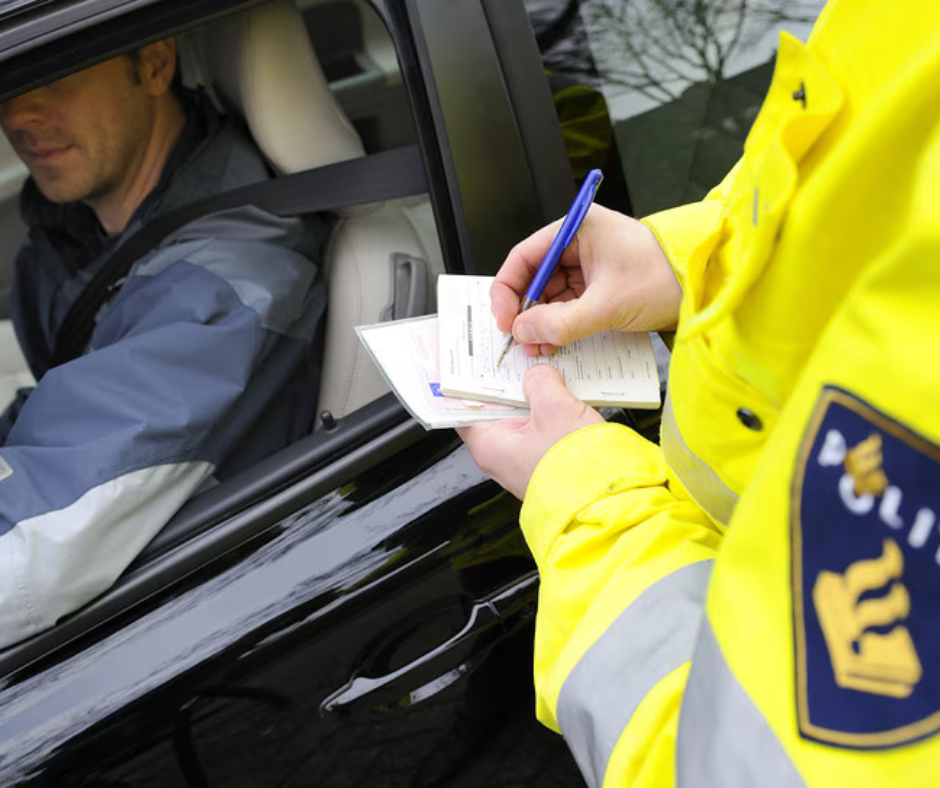
In recent years, Belgian authorities have significantly intensified road checks and the enforcement of traffic violations. Whether you receive an immediate-payment notice, a settlement proposal or, worse, a summons to appear in court, the legal process that follows can seem complex, costly and stressful.
This article breaks down each stage of a traffic case leading up to the police court, explains how to contest a fine effectively, and highlights the pitfalls you should avoid.

Typical Procedural Path: From the Offence to the Police Court
When you commit a traffic offence (speeding, exceeding the alcohol limit, using a mobile phone while driving, etc.), the police draw up an official report. This document is crucial: it records the facts, identifies the vehicle and driver, and notes the location and time of the offence.
Within fourteen days, the police send you a copy of the report by post, together with a reply form to be completed. This is where the process starts moving.
Meanwhile, the Public Prosecutor's Office reviews the file and decides on the course of action. For most offences, the law provides a three-step pathway.
Step 1: The Immediate Payment – The Initial Offer
During the intervention, if the offence allows it, the police officer may offer you an immediate payment, a type of on-the-spot settlement, or it may be sent later by post. Sending it by mail, together with the official report, is mandatory if the offence was not detected directly by an officer.

The immediate payment has one essential advantage: once you pay, the case is closed and you avoid the court. However, this option is not available for all offences—particularly not for drunk driving situations or serious/repeat violations. In those cases, a criminal settlement or direct summons to the police court is typically issued.
But beware: paying an immediate payment equals an admission of the offence. This is strongly discouraged if the charge can be seriously contested.
Step 2: The Criminal Settlement – If the Immediate Payment Was Not Paid
If you refuse the immediate payment, the Public Prosecutor may send you a criminal settlement proposal. This amount is generally about 35% higher than the initial immediate-payment sum.
Like the immediate payment, the settlement definitively closes the case if you accept it. Paying stops the procedure and keeps you out of court. Once again, paying means admitting guilt.
Step 3: The Payment Order – The Final Warning Before Court
If you pay neither the immediate payment nor the settlement, the Public Prosecutor typically issues a payment order. This is formally a final notice: it is your last chance to settle without going to court.
The payment order includes an additional increase compared to the settlement and also adds administrative fees and a contribution to the Victim Support Fund (around €200). Amounts accumulate quickly.
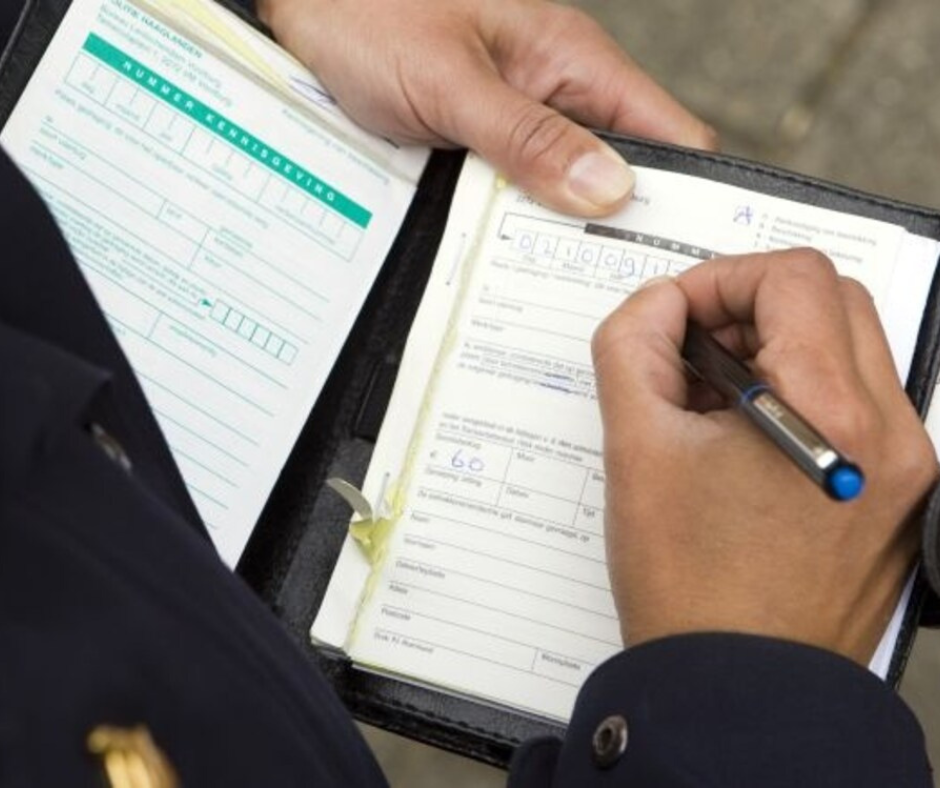
You then have 30 days to contest the payment order before the competent police court. If you neither contest nor pay, the prosecution will automatically issue a summons to appear in court.
How to Contest Effectively: Valid Grounds and Contestation Procedure
Before deciding to contest, it is crucial to identify legally valid grounds.
Arguments such as “I didn’t understand the sign” or “I was in a hurry” will not hold up. Procedural errors or material inaccuracies, however, are strong grounds.
Valid reasons for contesting include:
- Procedural error: the official report was sent after the 14-day deadline, or it contains inconsistent or incomplete information (incorrect date, unclear location, misidentified vehicle, missing measured or corrected speed).
- Vehicle misidentification: the licence plate may have been recorded incorrectly, especially in radar-based automatic detection.
- Radar malfunction or poor calibration: speed measurement devices must comply with strict verification and calibration standards. Missing proof of regular calibration may justify contestation.
- Missing or poorly visible speed-limit signs: you may contest if the sign was worn, hidden by foliage, or simply absent.
- Mitigating or exceptional circumstances: force majeure (such as emergency braking to avoid a sudden obstacle), temporary circumstances not indicated on site (roadworks, detour, exceptional weather).
You have 30 days to contest online via Just-on-Web or by registered mail using the reply form provided. Contesting online has several advantages: uploading documents, real-time tracking of your case, and secure archive access.
Whether online or by mail, your contestation must be well-motivated and supported with evidence: photos of the location, technical certificates of the vehicle, witness statements, etc.
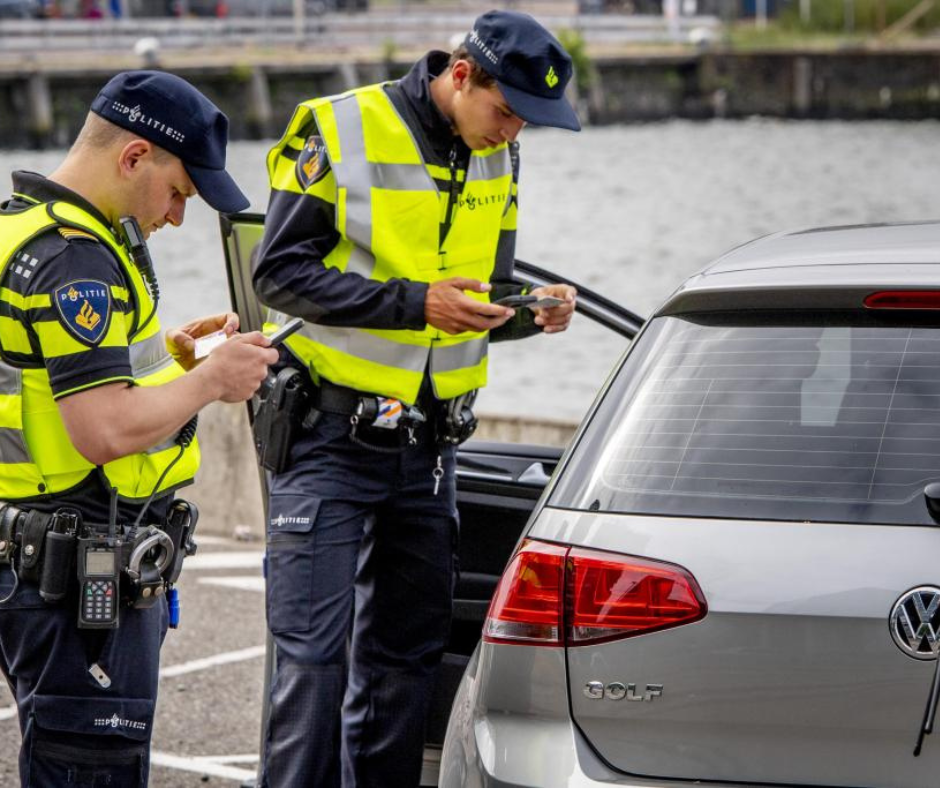
Submitting the contestation has a suspensive effect: you do not have to pay for about one month while the Public Prosecutor reviews your file.
After reviewing your defence, the Public Prosecutor may either accept the contestation and cancel the offence, or reject it and give you a final deadline for payment. If you still refuse to pay, you will be summoned to the police court.
Before the Police Court: Stakes and Procedure
If you are summoned before the police court, the stakes increase dramatically. A €50 immediate-payment fine, if contested and ultimately lost in court, will be multiplied by eight (additional surtaxes), becoming €400. Court costs are then added on top, quickly raising the total.
For serious offences (alcohol, mobile phone driving, major speeding), penalties are much heavier in court (high fines, driving bans, alcohol lock, etc.).
Given the stakes, proper preparation is essential:
- Meet with your lawyer to build your defence strategy and bring all useful documents (photos, statements, driving licence…). Present the facts clearly and consistently to avoid contradictions.
- Dress appropriately. A neat appearance (suit or shirt) shows respect for the court and can positively influence the judge’s impression.
- Arrive early on the day of the hearing to pass security checks, find the courtroom and briefly consult your lawyer. Arriving late creates unnecessary stress and harms the impression you make.
During the hearing, the judge will summarise the facts and listen to the Public Prosecutor’s request. Then the lawyer presents the defence based on the client’s explanations and evidence. Finally, the defendant—if present—has the last word. This is delicate: you must not contradict your lawyer’s arguments (e.g., saying “I’m sorry, I won’t do it again” when the lawyer is arguing for acquittal).
In most cases, the police court delivers its decision immediately after the hearing. You are then informed directly of any penalties imposed.
Judgments are always pronounced in public, and you can obtain a copy of the decision at the court registry. If you disagree with the decision, you may appeal, which generally suspends the first judgment until the appeal ruling.
Conclusion: Preparation, Documentation and Professional Guidance
The procedural pathway for traffic offences is complex, filled with strict deadlines, irreversible choices (such as payment, which equals admission), and serious consequences (fine multiplied by eight, driving licence withdrawal, or even more serious criminal penalties).
Improvisation is not an option. A poor decision can turn a minor offence into a disastrous sanction.
In this demanding legal landscape, preparation, careful documentation and professional guidance are essential.

Auditing the grounds for the charge, collecting the right evidence, respecting deadlines to the day, and planning your strategy with clarity are crucial steps that require the assistance of an experienced traffic-law attorney.
With its strong expertise in traffic law and a managing partner who previously also served as a substitute police judge in Brussels, Vanbelle Law Boutique is your strategic partner to analyse your file, define optimal strategies, secure your defence and advocate your interests effectively before the competent courts.


.png)