
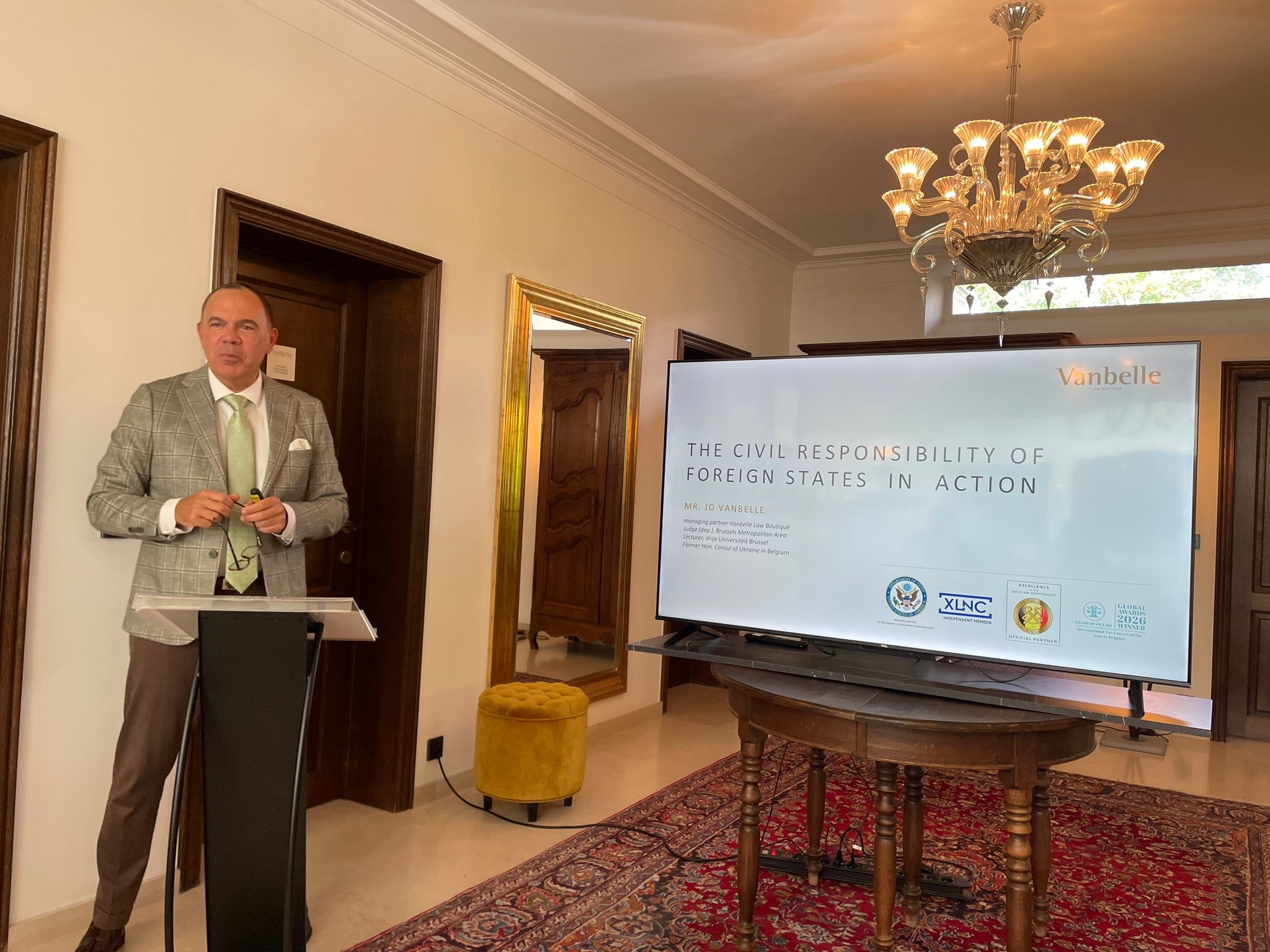
Last week, Jo Vanbelle welcomed a new edition of the House of Diplomacy at the offices of Vanbelle Law Boutique in Brussels. During the gathering, Jo gave a lecture on a subject situated at the intersection of international law, diplomacy, and practical legal reality: the civil responsibility of foreign states and the immunity enjoyed by diplomatic missions and their personnel.
The discussion focused not merely on legal theory, but on the practical tensions that can arise when foreign states and diplomats interact with local entrepreneurs, landlords, and service providers.
When Sovereignty Meets Everyday Reality
International law recognizes a fundamental principle: sovereign states are equal and immune. As reflected in the jurisprudence of the International Court of Justice and the Vienna Convention framework, foreign states and diplomatic agents enjoy extensive protections designed to safeguard international relations and diplomatic functioning.
Yet in practice, these protections can sometimes create difficult situations for private actors operating locally:
- What happens when an embassy refuses to pay invoices after a diplomatic event?
- What remedies remain available when diplomatic personnel fail to honor private contractual obligations?
These examples formed the starting point of the discussion.
The Delicate Distinction Between Public and Private Acts
A central theme of the lecture concerned the distinction between:
- Acta Iure Imperii
(acts performed in the exercise of sovereign authority)
and
- Acta Iure Gestionis
(acts of a commercial or private nature)
While the distinction appears straightforward in theory, its practical application often remains highly nuanced.
The Belgian procedural framework — including Articles 1412bis and following of the Belgian Judicial Code — attempts to balance sovereign immunity with the legitimate interests of creditors and local actors.
Diplomats, Immunity and Practical Limitations
The lecture also explored the specific protections granted to diplomats under the Vienna Convention on Diplomatic Relations.
Even in situations involving private obligations — such as residential leases — diplomatic immunity can create significant procedural obstacles for local landlords and counterparties.
In some cases, effective enforcement may ultimately depend less on judicial mechanisms and more on the willingness of the sending state itself to intervene responsibly. This reality highlights a broader question raised during the evening:
How can the relationship between diplomatic missions and the local community be strengthened in a manner that promotes both international protection and legal certainty?

Reputation, Trust and Legal Certainty
One of the concluding reflections of the evening concerned the growing importance of reputation and trust in international interactions.
For local entrepreneurs and service providers working with foreign missions, legal enforcement mechanisms may not always offer sufficient certainty. As a result, stability often depends on additional guarantees, clear contractual structures, and the reliability historically demonstrated by the sending state itself.
In this respect, diplomacy extends beyond legal immunity alone.
It also concerns responsibility, cooperation, and long-term trust between states and the local communities in which they operate.
Continuing the Conversation
The House of Diplomacy meetings organized by Vanbelle Law Boutique aim to create space for precisely these types of discussions — where legal complexity, international relations, and practical realities intersect.
The presentation accompanying this House of Diplomacy gathering can be consulted below:



.png)