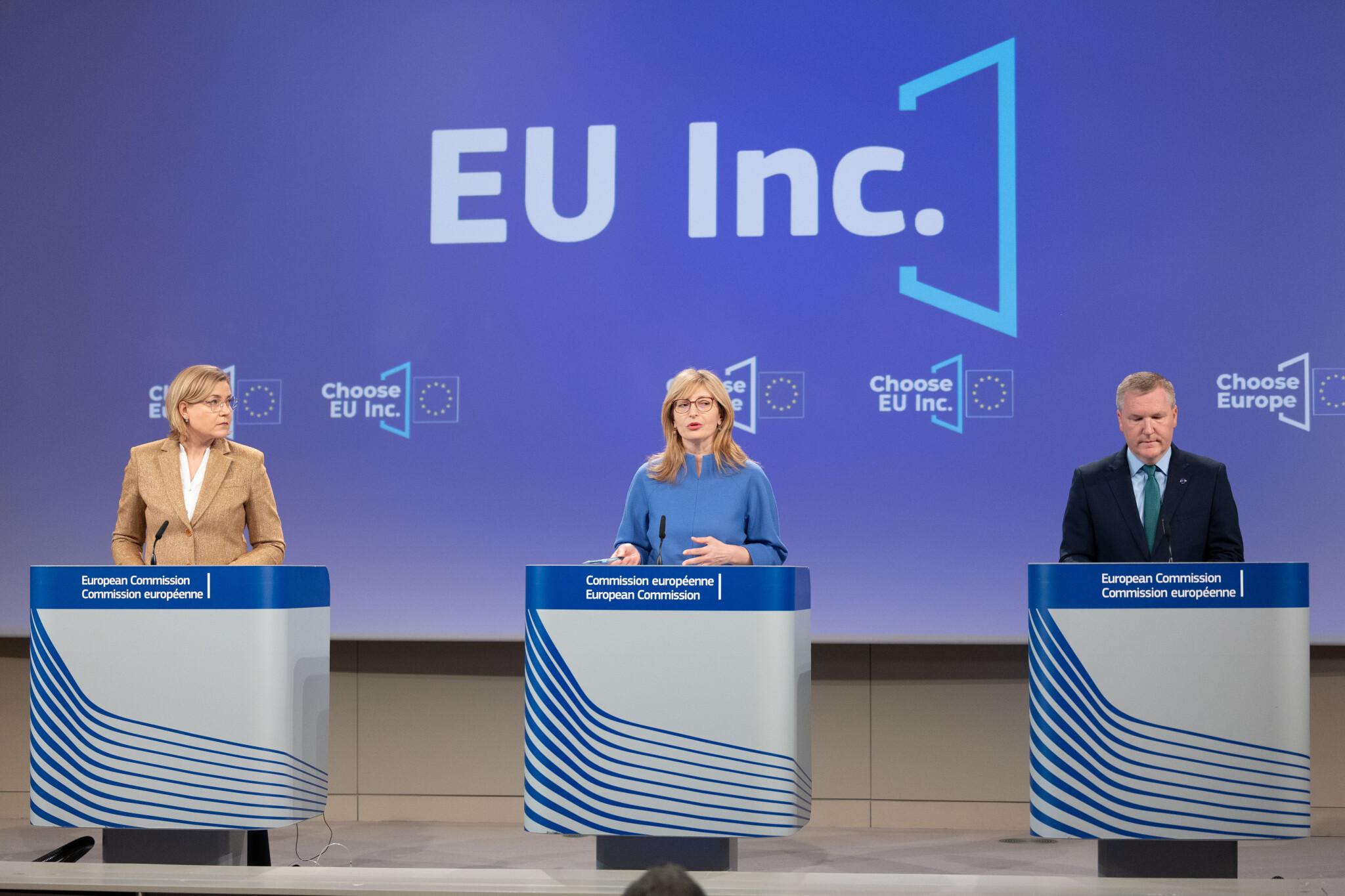
On 18 March 2026, the European Commission unveiled a highly anticipated regulatory proposal designed to establish a single, harmonized corporate framework across the European Union.
Dubbed "EU Inc.", this "28th regime" project aims to dismantle the structural barriers that continue to hinder the growth and cross-border expansion of European businesses. Here is our legal analysis of what this means for entrepreneurs and investors.
A Single Market, Twenty-Seven Legal Borders: The European Paradox
Despite decades of economic integration, recent reports by Mario Draghi and Enrico Letta have delivered a clear verdict: the European Union suffers from a persistent competitiveness and innovation gap relative to its global competitors. For start-ups and scale-ups, expanding across national borders remains an uphill battle.

Today, a company looking to scale across multiple Member States must navigate 27 distinct national corporate legal systems, varying capital requirements, fragmented notarisation and registration procedures, and high legal advisory and compliance costs. This regulatory fragmentation far too often pushes European founders to structure their businesses outside of Europe, favoring more flexible frameworks such as Delaware-style structures in the US.
What is the EU Inc. Project?
To address this challenge, the European Commission took a bold step in March 2026 by proposing a regulation establishing the EU Inc. legal form. The objective is not to replace existing national laws, but to introduce an optional 28th regime—a unified, modern corporate framework available across all 27 Member States.
In practical terms, this new status introduces several major improvements:
- Ultra-Fast and Digital Incorporation: An EU Inc. company can be incorporated within a maximum of 48 hours via a centralized European digital interface (leveraging the BRIS network) at a capped cost of 100 euros, with no minimum share capital requirement.
- Fully Digital Lifecycle: From register management and shareholder meetings to document storage and capital transactions, all administrative actions can be handled digitally, supported by the European Digital Identity Wallet.
- The Once-Only Principle: Once registered, companies are spared the burden of submitting information repeatedly to various local authorities. Business registers will automatically share required data (such as registration details, VAT numbers, and beneficial ownership information) with relevant tax and social security bodies.
- Enhanced Growth and Talent Retention Tools: The framework significantly simplifies the setup and cross-border management of employee stock option plans, enabling European tech companies to better compete for global talent.
What does this mean for businesses?
For entrepreneurs and companies, this new framework may offer an additional perspective. EU Inc. could make it easier to operate across borders and raise capital without becoming overly entangled in legal complexity.

From a technical perspective, EU Inc. would remain subject to national law for matters not covered by the European regulation, while maintaining strict compliance with social standards, employee participation in corporate governance bodies and the applicable tax rules (with the registered office remaining decisive for tax purposes).
On the other hand, there are still significant questions as to the inherent legal quality of such an additional European corporate structure and the level of confidence it will command across the various jurisdictions involved in the activities undertaken by such an EU structure. What, for example, about limited liability, the separation of assets, insolvency, etc.? Will business partners be willing to engage with such a “light” structure? Is it legally, financially and operationally stable enough? Can the associated risks be assessed sufficiently?
Looking Ahead
The legislative proposal is currently being thoroughly discussed within the European Parliament and the Council, with strong political ambitions to reach an agreement by the end of 2026.
Anticipating the arrival of EU Inc. in your future structuring and investment plans, or when selecting future partners and projects, could prove to be a decisive competitive advantage — or, conversely, could help you better protect your existing business.

Vanbelle Law Boutique is ready to discuss all of this with you in depth and tailor the analysis to your specific situation.

.png)